Beyond the Limit: How Liquid Cooled Charging Cables Enable the Future of Ultra-Fast EV Charging
Jul 24,2025 | TC CHARGER
The race for faster electric vehicle charging is on. While achieving a 350 kW or even 500 kW charge rate is a feat of automotive and electrical engineering, there's a simple physical challenge: the charging cable itself. As power levels increase, so does heat, leading to a critical bottleneck.
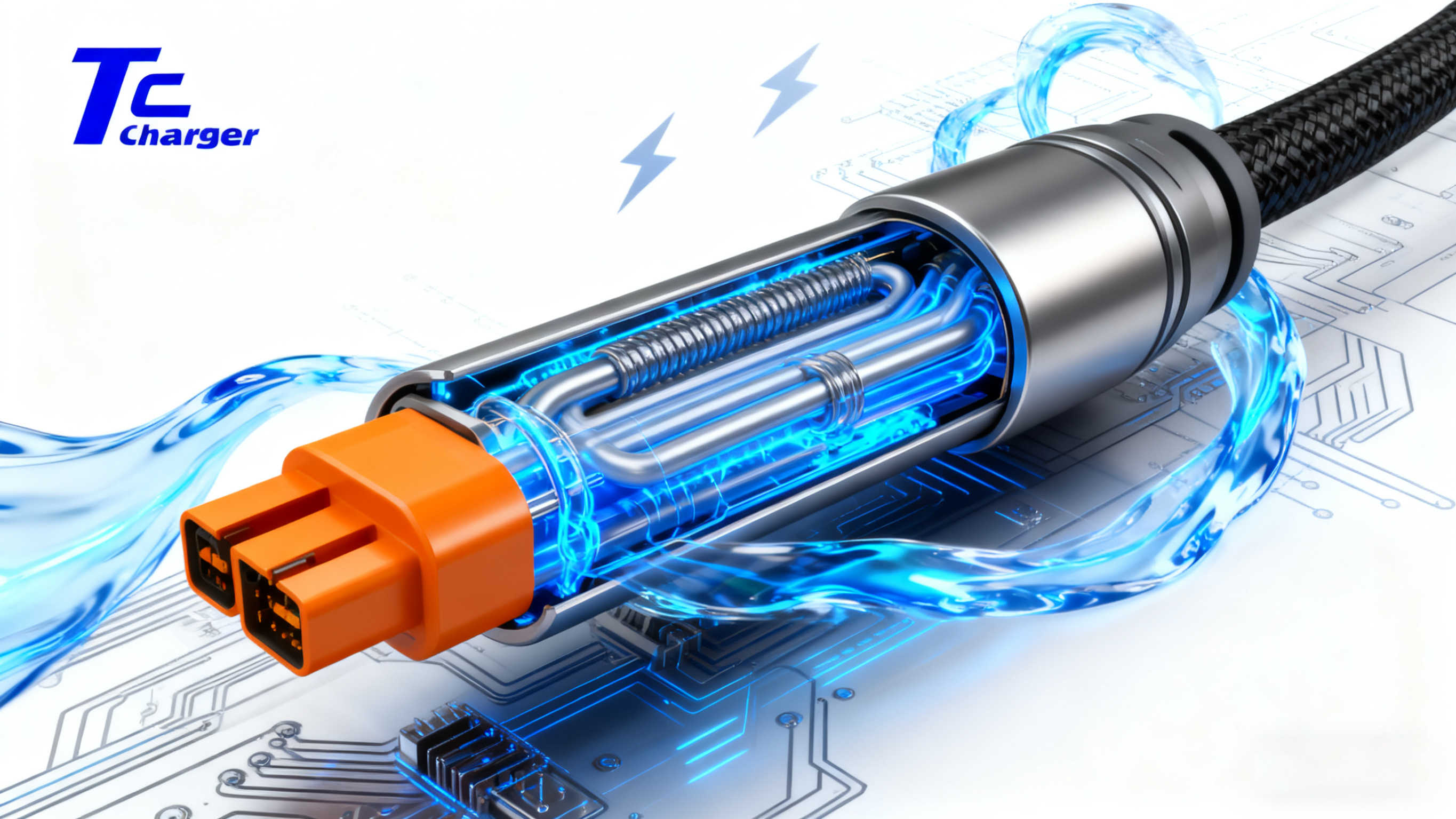
The solution? Liquid cooled charging cables. This advanced technology is the key to unlocking the next generation of ultra-fast charging without creating bulky, unwieldy cables. Let's explore how it works and why it matters.
The Problem: Heat is the Enemy of Speed
The fundamental law of physics is clear: when high electrical current flows through a conductor, it generates heat due to resistance. For DC fast charging (DCFC), pushing 400 amps or more through a standard copper cable would cause it to become dangerously hot, heavy, and rigid.
This creates a triple problem:
-
Safety Risk: Overheating cables can be a fire hazard and damage the charging equipment or vehicle.
-
User Unfriendliness: A cable thick enough to passively dissipate that heat would be too heavy for most people to lift and maneuver easily.
-
Power Limitation: Without a way to manage heat, charging speeds would be capped to prevent melting the cable.
The Solution: What is a Liquid Cooled Charging Cable?
A liquid cooled charging cable is an active thermal management system integrated directly into the cable's design. Instead of relying solely on thick copper conductors to reduce resistance, it uses a smarter approach:
-
Thinner Conductors: The cable uses smaller-diameter conductors, which naturally have higher resistance and generate more heat for a given current.
-
Cooling System: A separate tube within the cable circulates a specially designed dielectric (non-conductive) coolant.
-
Heat Absorption: As current flows and the conductors heat up, the circulating fluid absorbs the heat.
-
Heat Dissipation: The warm fluid travels to a heat exchanger (a small radiator) located in the charging station, where it is cooled down before being pumped back into the cable.
This closed-loop system continuously removes heat, allowing the cable to safely carry much higher currents than a passive cable of similar size and weight.
Key Benefits of Liquid Cooled Charging Cables
The advantages of this technology are transformative for the high-power charging experience:
-
Enables Ultra-Fast Charging (>350 kW): This is the primary benefit. Liquid cooling is essential for achieving the extreme power levels needed to charge an EV in minutes rather than hours.
-
Lighter and More Flexible Cables: By allowing for thinner conductors, these cables are significantly lighter and easier for all users to handle, improving accessibility.
-
Improved Safety: Active temperature monitoring and cooling prevent the cable and connector from overheating, ensuring a safe charging session even at maximum power.
-
Longer Cable Life: By operating at lower temperatures, the internal components of the cable experience less thermal stress, leading to greater long-term reliability.
The Relationship with Onboard Charging
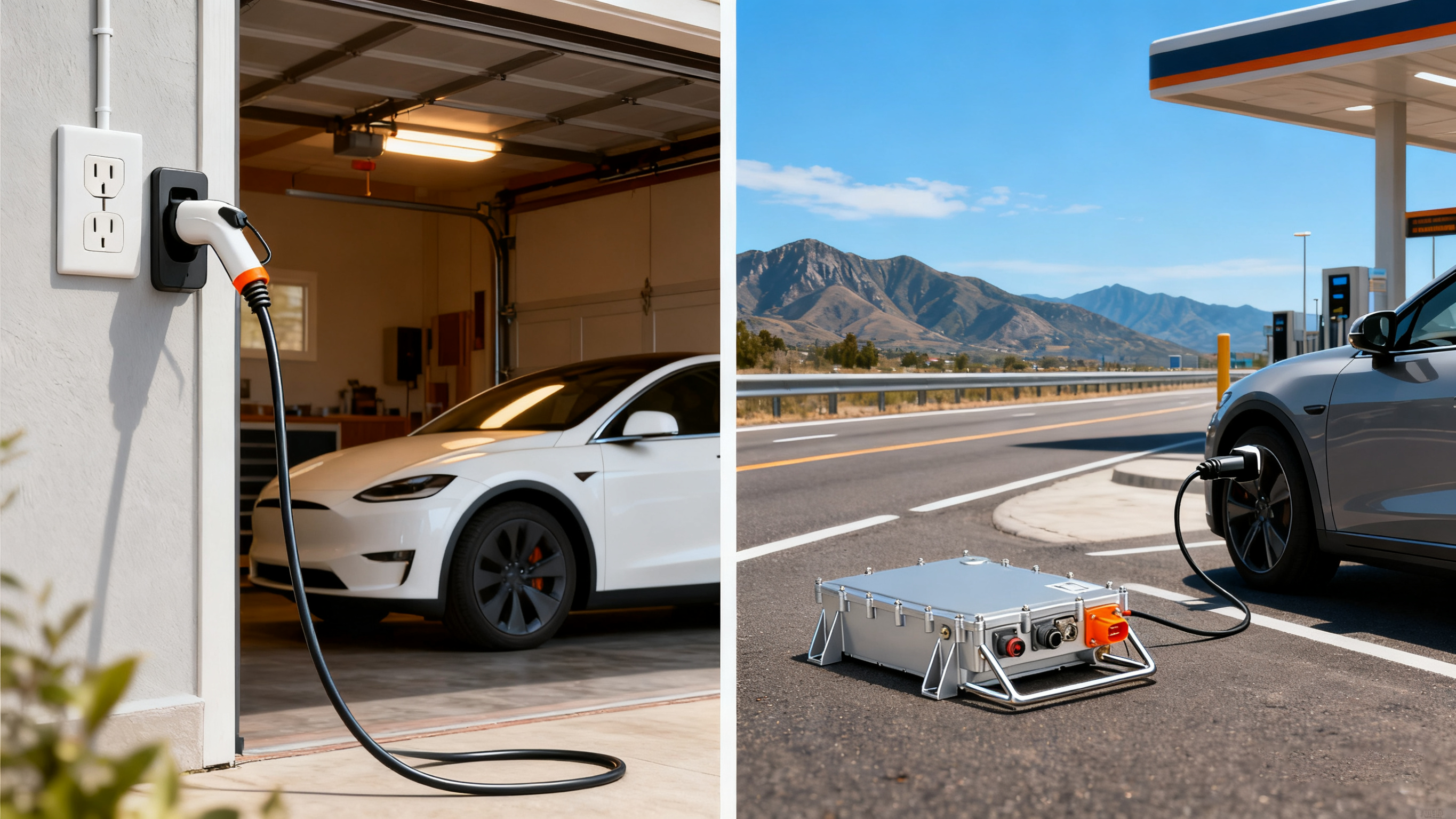
It's important to note that liquid cooled charging cables are used exclusively with DC fast chargers (DCFC), which bypass the vehicle's onboard charger (OBC). The OBC handles AC charging from Level 1 and Level 2 stations.
Think of it as a division of labor:
-
The onboard charger is your vehicle's personal, built-in AC-to-DC converter for daily, convenient charging.
-
The liquid cooled charging cable is part of the specialized, high-power DC infrastructure for rapid long-distance travel.
Both technologies are essential for a complete and versatile EV ecosystem.
The Future is Cool and Fast
As battery technology improves and vehicles accept higher charging rates, the demand for liquid cooled charging cables will become standard at high-power charging hubs. The technology will continue to evolve, becoming more efficient, compact, and integrated with smart monitoring systems.
This innovation is a critical step towards making EV charging as fast and convenient as refueling a traditional car, finally eliminating "range anxiety" for good.
The evolution of charging technology, from the onboard charger to the liquid cooled cable, is relentless. At OnBoard-Charger.com, we are committed to tracking and explaining the innovations that power the future of electric mobility.
Comment