Battery Swapping vs. Fast Charging: How On-Board Chargers Are Shaping the Future of EV Mobility
May 09,2026 | TC CHARGER
The global electric vehicle revolution is no longer merely about driving range or battery capacity—it centers on energy replenishment accessibility. As EV adoption rises sharply, two mainstream energy supply models dominate industry discussions: battery swapping and DC fast charging.
Meanwhile, the overlooked core component connecting both solutions—the on-board charger (OBC)—is reshaping EV flexibility, grid compatibility and overall user experience. This article compares battery swapping and fast charging, analyzes the indispensable role of on-board chargers, and explores how the three elements jointly define the long-term landscape of electric vehicle mobility.
The Core Battle: Battery Swapping vs. Fast Charging
Before exploring the value of OBCs, it is essential to clarify the fundamental differences between the two leading energy supply models, along with their inherent strengths and limitations.
Battery Swapping: Instant Convenience with High Infrastructure Complexity
Battery swapping replaces a depleted battery pack with a fully charged unit at dedicated stations, usually completed within 1 to 3 minutes. Drivers can finish the whole process without leaving their vehicles, offering an experience comparable to refueling traditional gasoline cars.
Key advantages:
- Ultra-quick energy replenishment, perfectly suited for ride-hailing fleets, taxis and delivery vehicles with tight schedules.
- Optimized battery health: Swapped batteries are charged offline with low current, effectively avoiding performance degradation caused by frequent high-power charging.
- Grid-friendly operation: Separates vehicle energy demand from real-time grid load, balancing power consumption and easing pressure during peak hours.
Main limitations:
- Exorbitant infrastructure costs: Swap stations require large battery inventories, automated robotic equipment and unified battery specifications, bringing huge investment costs per site.
- Standardization obstacles: Most automakers adopt customized battery pack designs, making cross-brand battery swapping difficult to realize on a large scale.
- Scalability constraints: The model works well in densely populated urban areas, while rural and remote regions lack sufficient traffic to support profitable station operation.
Fast Charging: Universal Compatibility with Hidden Trade-Offs
DC fast charging delivers high-voltage DC power directly to battery packs while bypassing the built-in OBC, with power output ranging from 50 kW to 480 kW. Modern ultra-fast charging solutions can add over 200 kilometers of driving range in just 15 minutes.
Key advantages:
- Mature deployment and wide coverage: Fast charging stations are extensively distributed along highways, urban centers and public parking lots, with broad compatibility across most EV brands.
- Lower construction costs: A single fast charging station costs far less than a battery swapping station, enabling faster network expansion.
- High flexibility for all user groups: Ideal for long-distance travelers and users without fixed home charging conditions.
Main limitations:
- Accelerated battery aging: High-current charging generates substantial heat, which gradually weakens battery lifespan with frequent use.
- Grid load pressure: Simultaneous fast charging during peak hours may overload local power grids, requiring costly grid upgrades or additional energy storage facilities.
- Queuing issues: Popular charging stations often face long waiting times during holidays and rush hours, reducing overall convenience.
The Hidden Core: What Is an On-Board Charger (OBC)?
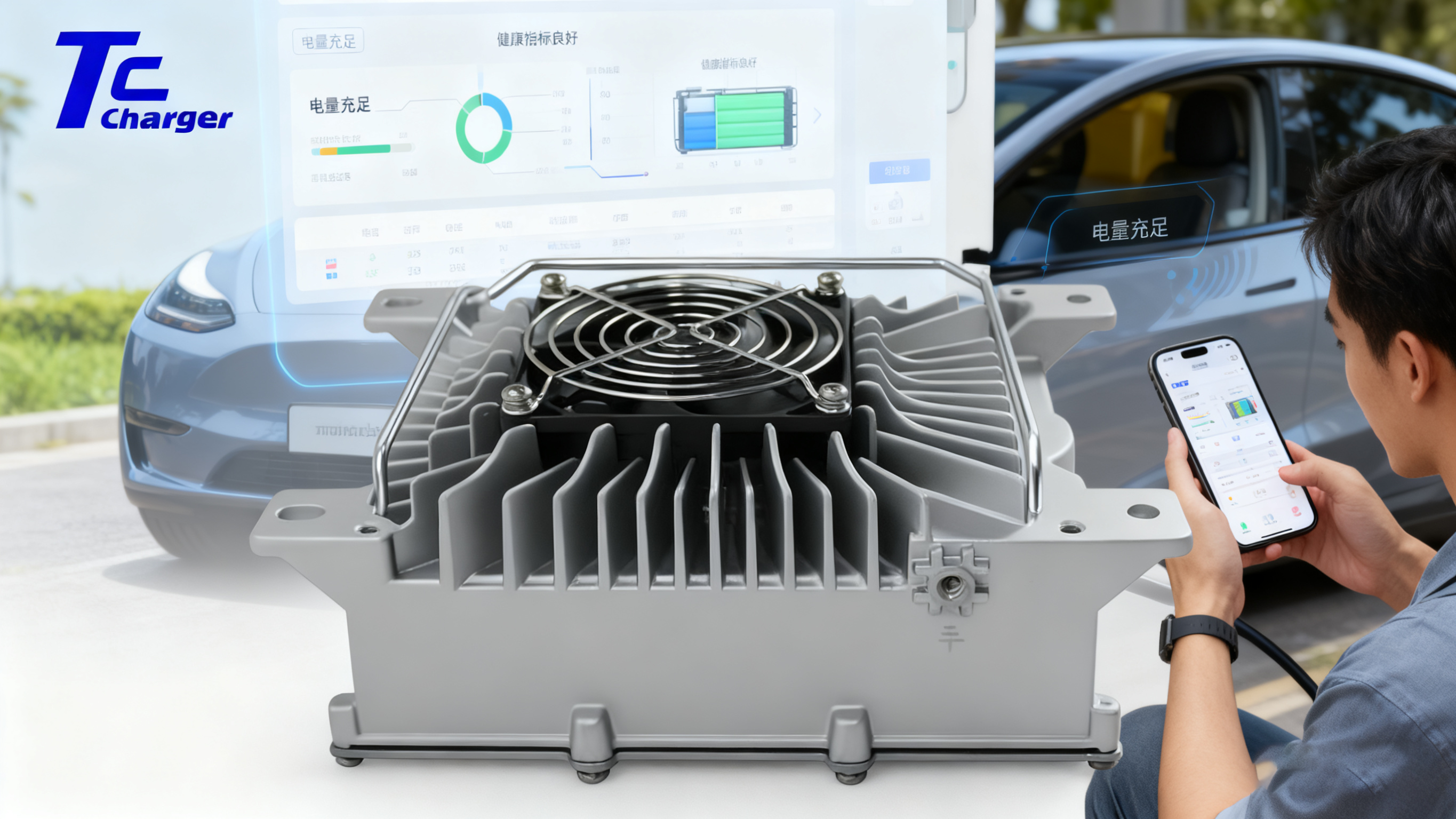
An on-board charger (OBC) is a built-in power conversion component of electric vehicles, responsible for converting AC power from public grids into DC power to charge high-voltage battery packs. Most passenger EVs are equipped with OBCs ranging from 3.7 kW to 22 kW, serving as a critical link connecting home charging, public AC charging stations, and even supporting both fast charging and battery swapping systems.
Core Functions of On-Board Chargers
- AC-to-DC power conversion, adapting conventional grid power to battery charging requirements.
- Intelligent battery protection by regulating voltage, current and temperature to avoid overcharging, overheating and cell damage.
- Smart grid compatibility: Next-generation bidirectional OBCs support V2G, V2H and V2L modes, turning electric vehicles into mobile distributed energy storage units.
Why OBCs Matter for Both Swapping and Fast Charging
Many users question why OBCs remain necessary when fast charging bypasses OBC devices and battery swapping directly replaces battery packs. The core value lies in usage flexibility, backup reliability and future-proof design:
- Reliable backup for fast charging: When DC fast charging stations are unavailable or out of service, OBCs allow drivers to access widely available AC charging facilities as an alternative solution.
- Universal compatibility for swapping models: EVs supporting battery swapping still retain OBCs for daily home charging and emergency AC power replenishment, ensuring usability beyond swap station coverage.
- Enabling bidirectional energy circulation: While swapping and fast charging only focus on one-way power supply, advanced OBCs support energy output to grids, households and external devices, unlocking new application scenarios and economic value.
How On-Board Chargers Are Shaping the Future of EV Mobility
The future of electric mobility is not a simple choice between battery swapping and fast charging, but a hybrid coexisting ecosystem—and on-board chargers are the key foundation that unifies the whole system.
1. Balancing Speed and Daily Practicality for All Users
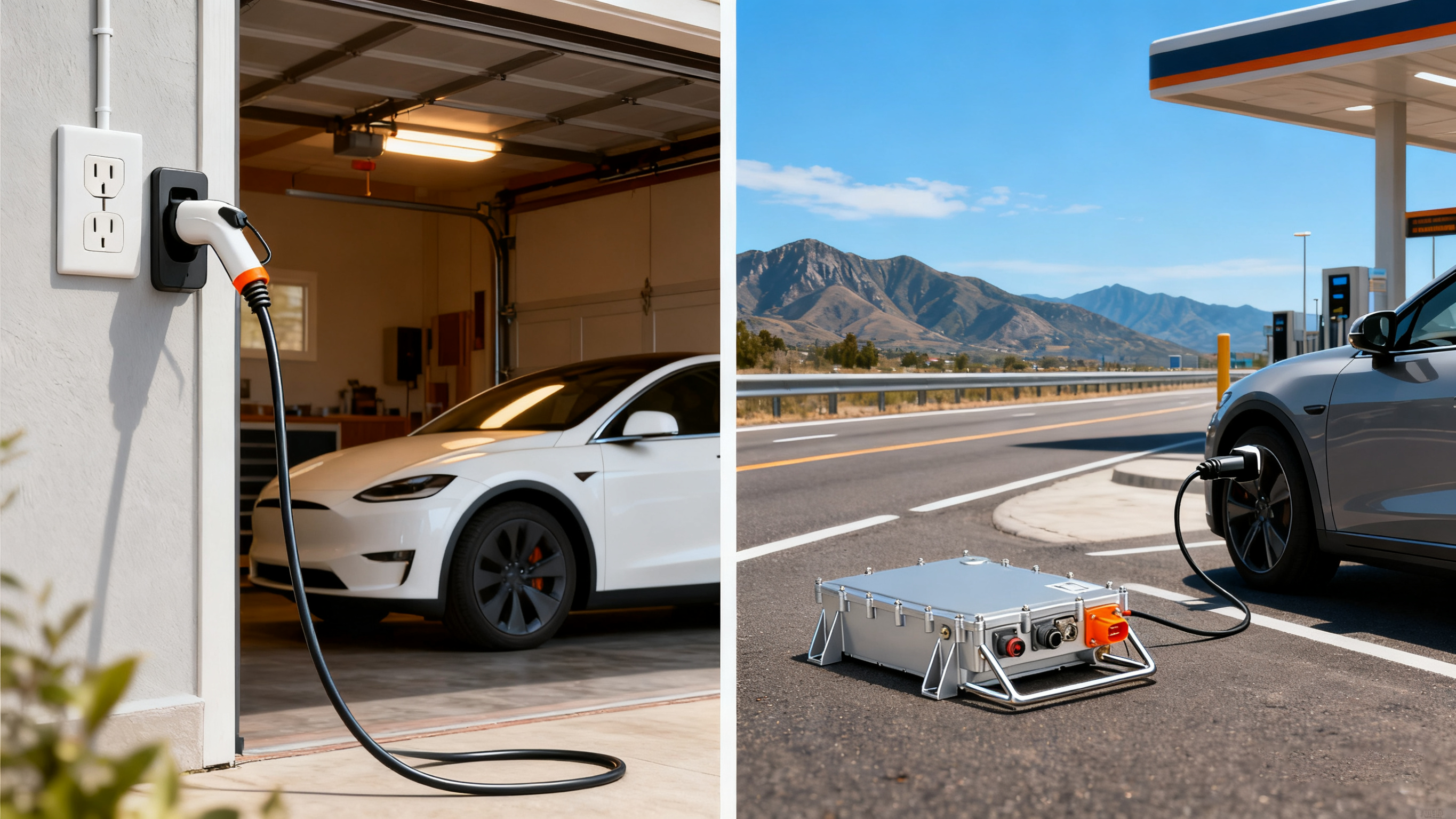
Urban commuters rely on 11–22 kW OBC home charging for overnight low-cost, battery-friendly power replenishment, while using battery swapping for quick top-ups during busy working days. Long-distance travelers depend on ultra-fast DC charging along highways, with OBC-enabled AC charging as a reliable backup at service areas. Fleet operators combine battery swapping for high-frequency vehicles and OBC-based off-peak charging to optimize operational costs.
2. Promoting the Popularization of 800V High-Voltage Platforms
800V high-voltage architecture cuts charging time by half and reduces vehicle wiring weight, and its full performance relies on upgraded high-power OBCs. Modern OBCs compatible with 800V platforms support 22 kW AC charging and bidirectional energy flow, becoming indispensable hardware for high-end and new-generation electric vehicles.
3. Enhancing Grid Resilience and Energy Independence
Bidirectional OBCs transform EVs into flexible energy resources:
V2G allows vehicles to feed surplus power back to the grid during peak demand, stabilizing grid operation and creating additional income for vehicle owners.
- V2H supplies household electricity during grid outages, improving living security in disaster-prone areas.
- V2L provides portable power for camping, construction sites and outdoor work scenarios.
4. Reducing Long-Term Total Cost of Ownership
OBC-regulated AC charging is gentler on battery cells than frequent DC fast charging, extending battery service life and lowering replacement costs. Meanwhile, the universal compatibility of OBCs enables charging at any conventional AC power outlet, eliminating range anxiety caused by insufficient dedicated charging facilities.
Our Insights
Battery swapping and fast charging will continue to compete in the market, yet on-board chargers are quietly defining the future of electric vehicle mobility. They balance charging speed and daily usability, connect EVs with smart power grids, and deliver reliable, low-cost energy solutions for all types of users.
In the evolving electric vehicle industry, the ultimate winners are not brands that stick to a single charging model, but those that leverage advanced OBC technology to build a seamless, diversified energy supply ecosystem. For every EV user, this means freedom from range anxiety, no more queuing at charging stations, and flexible energy replenishment anytime and anywhere.
Comment