Vehicle Battery Charger: The Complete Guide to Choosing the Right One
Jun 02,2025 | TC CHARGER
A reliable vehicle battery charger is an essential tool for every driver, whether you own a traditional gasoline vehicle, a hybrid, or a fully electric car. Understanding the different types of chargers and their specific applications can save you from unexpected breakdowns and extend your battery's lifespan.
Types of Vehicle Battery Chargers
1. Traditional Battery Chargers
For: Gasoline and diesel vehicles with 12V batteries
Key Features:
-
12V DC output
-
Various amperage ratings (2-50 amps)
-
Manual or automatic operation
-
Multiple charging modes
Best For:
-
Garage battery maintenance
-
Seasonal vehicle storage
-
Battery recovery and reconditioning
2. Smart Battery Chargers/Maintainers
For: All vehicle types with 12V systems
Advanced Features:
-
Microprocessor-controlled charging
-
Multi-stage charging (Bulk, Absorption, Float)
-
Automatic voltage detection
-
Battery desulfation mode
-
Spark-proof technology
Benefits:
-
Prevents overcharging
-
Extends battery life
-
Completely automatic operation
-
Multiple battery type compatibility
3. Portable Jump Starters
For: Emergency starting of all vehicle types
Critical Specifications:
-
High peak amperage (500-2000A)
-
Lithium-ion power banks
-
Safety protection circuits
-
Additional features (USB ports, flashlights)
Usage:
-
Roadside emergencies
-
Quick starts without another vehicle
-
Power source for mobile devices
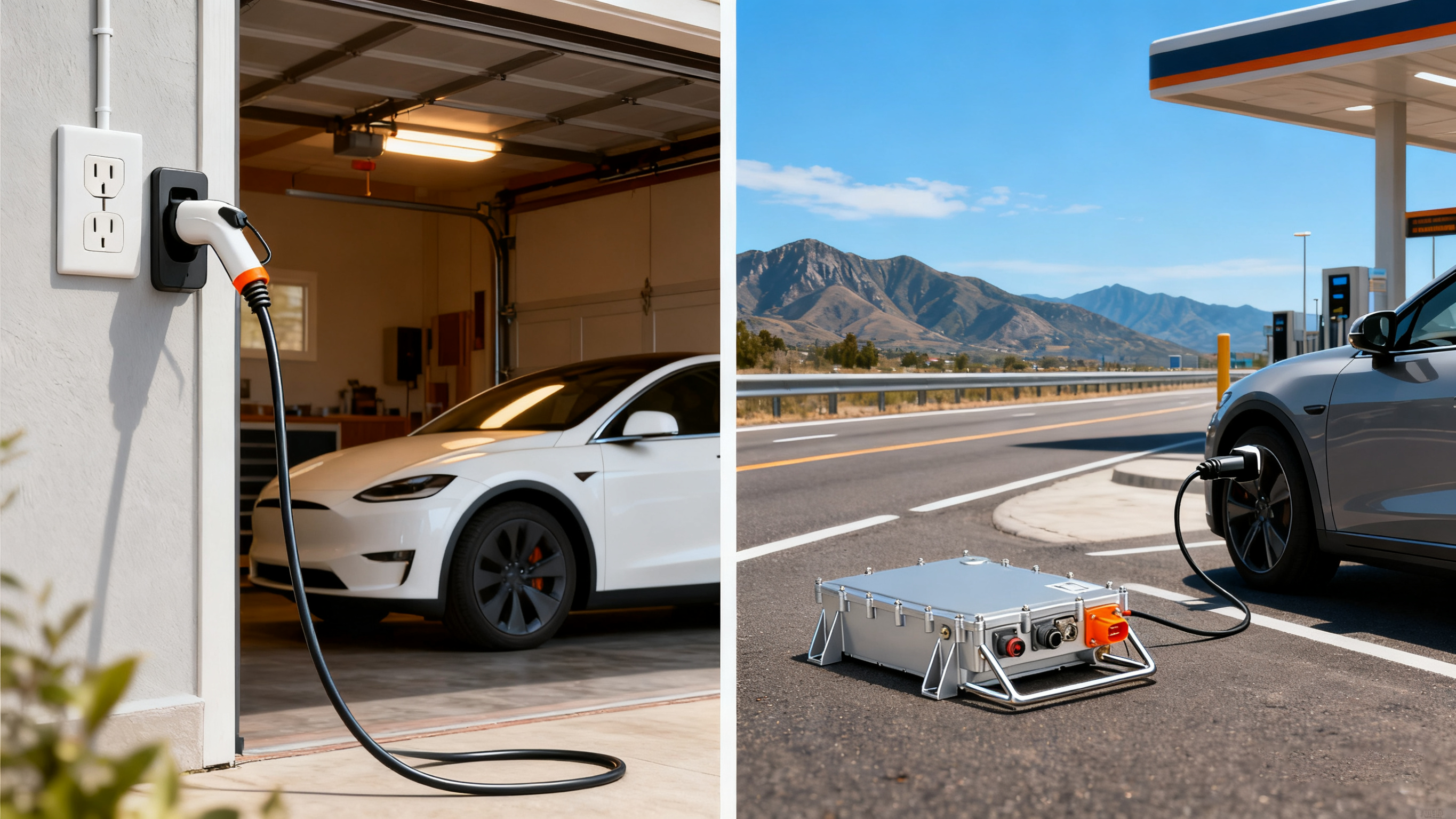
4. EV Charging Equipment
For: Electric and plug-in hybrid vehicles
Types:
-
Level 1 Chargers (120V AC)
-
Level 2 Chargers (240V AC)
-
DC Fast Chargers (public stations)
-
Portable EVSE (Electric Vehicle Supply Equipment)
Key Features to Consider
Safety Features
-
Reverse polarity protection
-
Overcharge prevention
-
Short-circuit protection
-
Thermal monitoring
-
Spark-free connectors
Performance Characteristics
-
Charging speed (amperage rating)
-
Efficiency (energy conversion)
-
Compatibility with battery types
-
Temperature compensation
-
Recovery capabilities
Convenience Factors
-
Automatic operation
-
Digital displays
-
Multiple charging modes
-
Portability and storage
-
Ease of use
Choosing the Right Vehicle Battery Charger
For Daily Drivers:
-
Smart battery maintainer (3-10 amp)
-
Portable jump starter for emergencies
-
Automatic charging features
For Seasonal Vehicles:
-
Battery tender/maintainer (1-2 amp)
-
Float charging capability
-
Long-term maintenance mode
For Electric Vehicles:
-
Level 2 home charger matched to vehicle's onboard charger
-
Portable charging cable
-
Smart charging features
For Commercial Fleets:
-
High-capacity chargers (20-50 amp)
-
Fast-charging capability
-
Durable construction
-
Multiple bank charging
Understanding Charger Specifications
Voltage Compatibility
-
6V: Motorcycles, small equipment
-
12V: Most cars, trucks, SUVs
-
24V: Commercial vehicles, heavy equipment
-
48V+: Mild hybrid systems
Amperage Ratings
-
1-3A: Battery maintenance, trickle charging
-
5-15A: Standard charging, most personal vehicles
-
20-50A: Fast charging, commercial applications
Battery Type Compatibility
-
Flooded (Wet) Lead-Acid
-
AGM (Absorbent Glass Mat)
-
Gel Cell
-
Lithium-Ion
Proper Usage and Safety Tips
Connection Procedure:
-
Read manufacturer instructions
-
Ensure proper ventilation
-
Connect positive terminal first
-
Connect negative to ground
-
Set appropriate charging mode
-
Monitor initial charging phase
Safety Precautions:
-
Never charge frozen batteries
-
Avoid open flames near batteries
-
Wear protective equipment
-
Disconnect power before removing clamps
-
Charge in well-ventilated areas
Maintenance and Care
Charger Maintenance:
-
Regular inspection of cables and connectors
-
Clean terminals and connections
-
Store in dry, temperature-controlled environment
-
Periodic testing of performance
Battery Health Monitoring:
-
Regular voltage checks
-
Specific gravity testing (flooded batteries)
-
Visual inspection for damage or corrosion
-
Load testing for capacity verification
Troubleshooting Common Issues
Charger Won't Start:
-
Check power source and connections
-
Verify battery voltage compatibility
-
Inspect for safety lockouts
Slow Charging:
-
Confirm proper amperage setting
-
Check for battery sulfation
-
Verify connection quality
Overheating:
-
Ensure adequate ventilation
-
Reduce charging amperage
-
Check for battery defects
Future Trends in Vehicle Battery Charging
Emerging Technologies:
-
Wireless charging systems
-
Solar-integrated chargers
-
AI-powered charging optimization
-
Bi-directional charging (V2G, V2H)
-
Universal compatibility standards
Smart Features:
-
Mobile app integration
-
Remote monitoring and control
-
Energy usage tracking
-
Grid-responsive charging
Making the Right Investment
Choosing the proper vehicle battery charger depends on several factors:
Consider Your Needs:
-
Vehicle types in your household
-
Usage patterns and driving habits
-
Storage conditions for vehicles
-
Budget and feature requirements
Quality vs. Price:
-
Invest in safety and reliability
-
Consider long-term savings from extended battery life
-
Choose reputable brands with good warranties
-
Read reviews and expert recommendations
Conclusion: Powering Your Journey
A quality vehicle battery charger is more than just emergency equipment—it's an investment in your vehicle's reliability and your peace of mind. Whether you need simple maintenance for a daily driver or comprehensive charging solutions for multiple vehicles, understanding your options ensures you'll always have the power when you need it.
From basic battery maintenance to advanced EV charging systems, proper power management is essential for modern vehicles. Visit OnBoard-Charger.com for more expert insights and the latest in charging technology.
Comment