Portable Electric Car Charger: Your Complete Guide to Mobile EV Charging
Jun 09,2025 | TC CHARGER
As electric vehicle ownership grows, so does the need for flexible charging solutions. A portable electric car charger is no longer just a convenience—it's becoming an essential accessory for EV owners who want freedom and peace of mind. But what exactly is a portable EV charger, and how do you choose the right one?
Understanding Portable Electric Car Chargers
What is a Portable Electric Car Charger?
Unlike the fixed onboard charger inside your EV, a portable electric car charger (more accurately called portable EVSE - Electric Vehicle Supply Equipment) is the cable and connector unit you carry with you. It's your mobile connection to power sources wherever you go.
Key Components:
-
Connector head (J1772 for most EVs)
-
Charging cable (typically 15-25 feet)
-
Control box with safety features
-
Power plug (various configurations)
-
Storage/carrying case
Types of Portable Electric Car Chargers
1. Level 1 Portable Chargers
Power: 120V AC, 12-16 amps
Charging Speed: 3-5 miles of range per hour
Best For:
-
Emergency backup charging
-
Overnight charging at standard outlets
-
Occasional use at locations without dedicated EV charging
Features:
-
Standard household plug (NEMA 5-15)
-
Lightweight and compact
-
Usually included with new EV purchases
2. Level 2 Portable Chargers
Power: 240V AC, 16-40 amps
Charging Speed: 12-30 miles of range per hour
Best For:
-
Regular home charging without permanent installation
-
Vacation homes and rental properties
-
Workplace charging flexibility
Features:
-
Various plug types (NEMA 14-50, 6-20, etc.)
-
Faster charging capabilities
-
Often includes smart features
3. Emergency Portable Power Banks
Power: DC fast-charging capability
Charging Speed: 10-20 miles in 30-60 minutes
Best For:
-
Emergency roadside assistance
-
Extending range in remote areas
-
Backup for unexpected low charge situations
Key Features to Look For
Safety Certifications
-
UL Listing or equivalent certification
-
Ground fault protection
-
Overcurrent protection
-
Thermal monitoring
-
Weather resistance (IP54 or higher)
Charging Performance
-
Amperage adjustability (8-40 amp settings)
-
Compatibility with your EV's onboard charger capacity
-
Cable length (20-25 feet ideal)
-
LED status indicators
Convenience Features
-
Compact, portable design
-
Integrated cable management
-
Multiple plug adapters
-
Storage bag/case
-
Smart connectivity (Wi-Fi/app control)
Benefits of Owning a Portable Electric Car Charger
1. Charging Flexibility
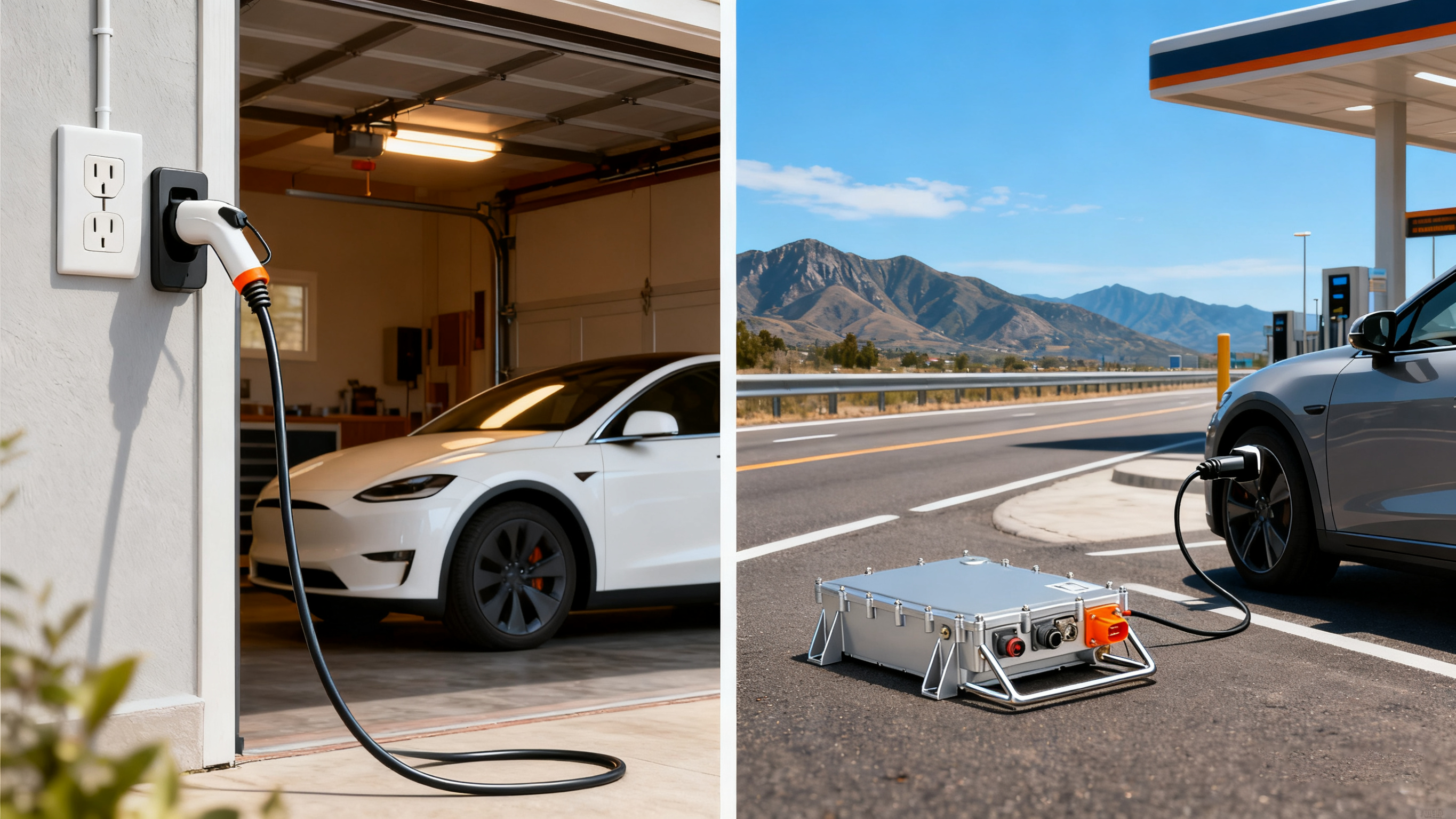
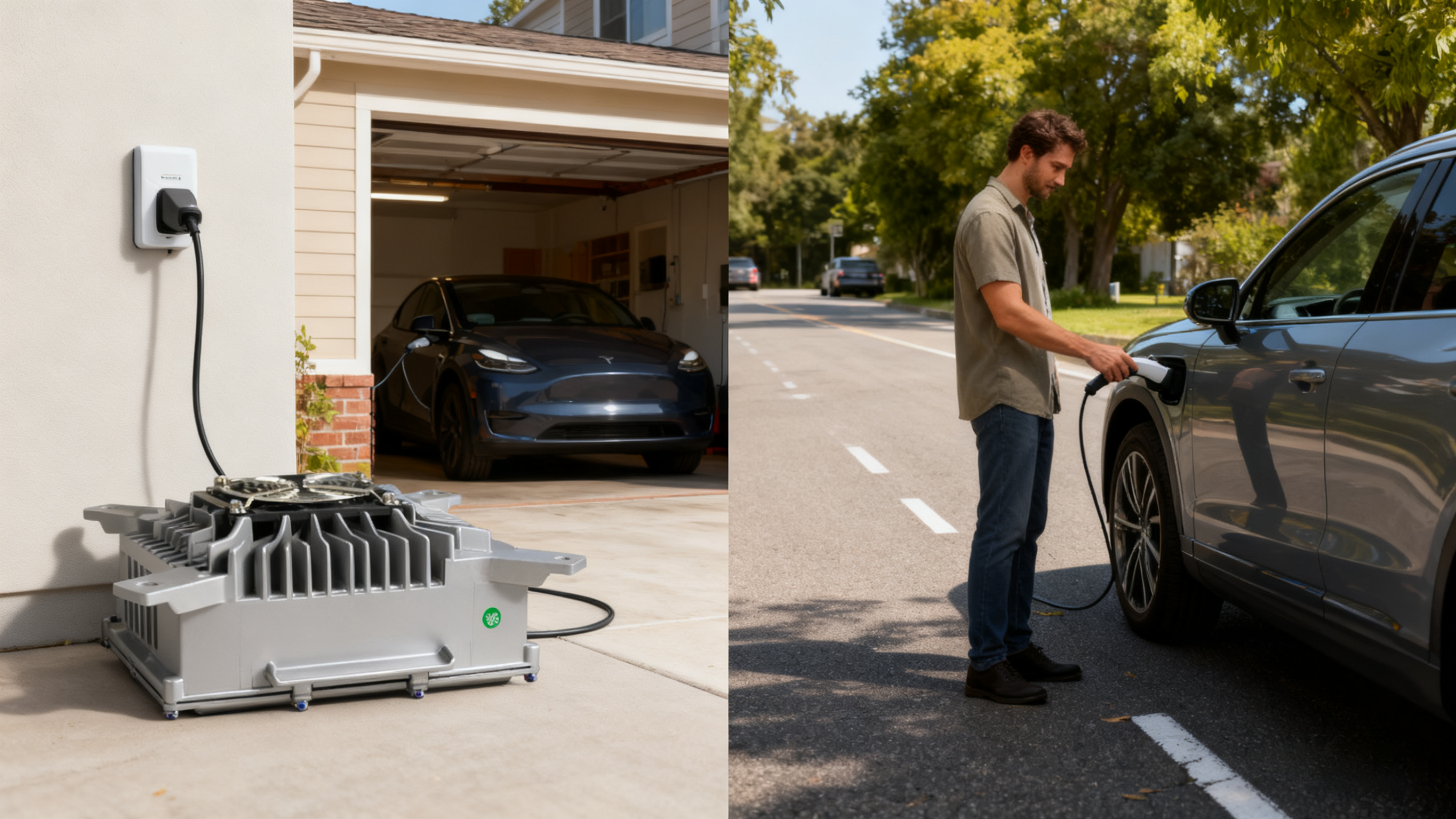
Charge your EV anywhere you can find a compatible outlet:
-
Standard household outlets
-
RV parks (NEMA 14-50 outlets)
-
Friends' and family's homes
-
Vacation rentals
-
Workplaces
2. Emergency Preparedness
Never worry about being stranded with:
-
Backup charging capability
-
Peace of mind on long trips
-
Alternative charging locations
3. Cost Savings
-
Avoid expensive public charging when alternatives exist
-
No need for multiple fixed chargers
-
Use at vacation homes without installation costs
How to Choose the Right Portable Charger
Consider Your Driving Needs
-
Daily commute distance
-
Frequency of long trips
-
Access to charging at home/work
-
Travel destinations and available power sources
Check Your Vehicle's Capabilities
-
Onboard charger capacity (3.3 kW, 7.2 kW, 11 kW, etc.)
-
Maximum AC charging rate
-
Connector type compatibility
Evaluate Power Requirements
-
Level 1: Sufficient for most overnight charging needs
-
Level 2: Better for regular use and faster charging
-
Dual-level: Most versatile, works with both 120V and 240V
Top Recommended Features
Must-Have:
-
Adjustable amperage settings
-
Safety certifications
-
Adequate cable length (20+ feet)
-
Durable construction
Nice-to-Have:
-
Multiple plug adapters
-
Digital display
-
Smartphone connectivity
-
Compact carrying case
Usage Tips and Best Practices
Safe Operation:
-
Always inspect the charger before use
-
Check outlet compatibility and rating
-
Ensure proper grounding
-
Avoid extension cords when possible
-
Keep control box dry and off the ground
Maximizing Efficiency:
-
Use the highest safe amperage for faster charging
-
Plan charging stops around available outlets
-
Carry plug adapters for different outlet types
-
Monitor charging through your vehicle's app
Limitations and Considerations
Charging Speed Reality:
-
Level 1 charging is slow - plan accordingly
-
Circuit limitations may reduce available power
-
Not all outlets are EV-ready
Practical Considerations:
-
Weight and storage space
-
Theft risk when charging in public
-
Weather exposure concerns
-
Outlet availability at destinations
Future Trends in Portable EV Charging
Emerging Technologies:
-
Bi-directional charging capability
-
Integrated solar charging
-
Lighter, more powerful designs
-
Enhanced smart features
-
Universal compatibility
Making the Right Choice
A portable electric car charger is an investment in your EV lifestyle freedom. Whether you choose a basic Level 1 unit for emergencies or a versatile Level 2 charger for regular use, the right portable charger will:
-
Extend your driving confidence
-
Provide charging flexibility
-
Offer emergency backup
-
Save money on public charging
Understanding portable charging solutions is key to maximizing your EV ownership experience. At OnBoard-Charger.com, we're committed to helping you navigate the world of EV charging technology, from portable solutions to advanced onboard charging systems.
Comment