More Than a Jumpstart: The Essential Guide to Your 12V Battery Charger
Jul 08,2025 | TC CHARGER
It's a scenario every driver fears: you turn the key and are met with nothing but a faint click. A dead 12V battery is the most common cause of roadside trouble, but it's almost always preventable. The unsung hero of vehicle reliability is a simple yet vital tool: the 12V battery charger.
But modern chargers are far more sophisticated than the simple "trickle chargers" of the past. Understanding your options can save you from a headache and extend the life of your battery.
Why You Need a 12V Battery Charger
Car batteries naturally self-discharge over time, especially in modern vehicles with constant background power draws for security systems, computers, and keyless entry. A 12V battery charger is essential for:
-
Maintaining Seasonal Vehicles: Keeping your classic car, motorcycle, or boat battery healthy during winter storage.
-
Preventing Issues with Infrequently Used Cars: If you work from home or have a second car that sits idle.
-
Emergency Preparedness: Having a way to revive a dead battery without needing another car for a jumpstart.
-
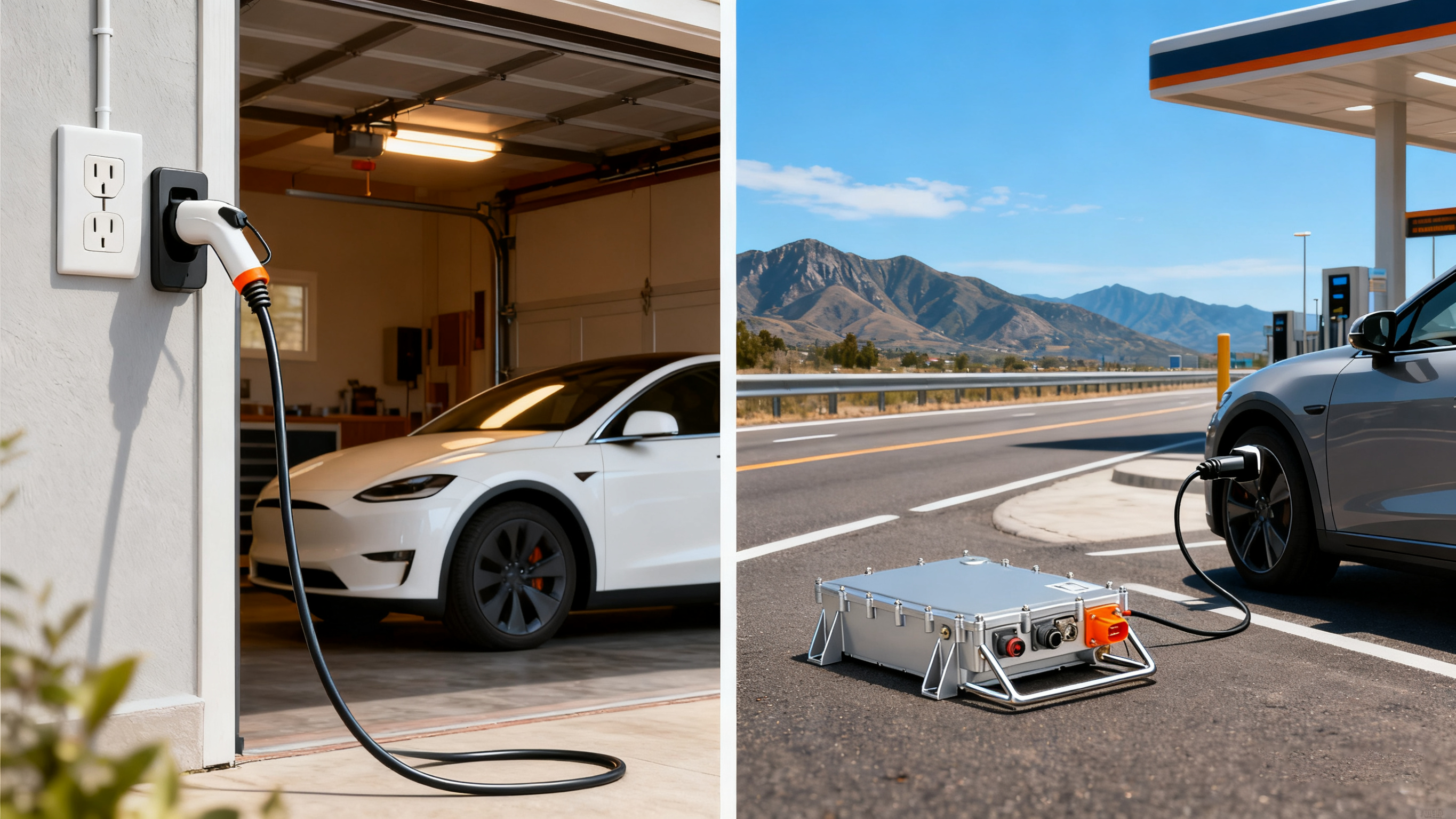
Electric Vehicle Maintenance: Yes, even your EV has a 12V battery that needs to be kept healthy!
Types of 12V Battery Chargers
Not all chargers are created equal. Here’s a breakdown of the main types:
1. Trickle Chargers / Battery Maintainers
-
Purpose: Designed for long-term maintenance, not reviving a dead battery.
-
How it Works: Provides a low, constant current (usually 1-2 amps) that matches the battery's self-discharge rate, keeping it at 100% without risk of overcharging.
-
Best For: Seasonal storage and infrequently used vehicles.
2. Smart (Automatic) Chargers
-
Purpose: The most versatile and recommended type for most users.
-
How it Works: Uses microprocessors to automatically perform multi-stage charging: Bulk (fast charge), Absorption (top-off), and Float (maintenance). It detects the battery's state and adjusts accordingly, preventing overcharging.
-
Best For: Almost every situation. It's the safest and most effective way to charge and maintain a battery.
3. Manual Chargers
-
Purpose: An older, basic technology.
-
How it Works: Provides a constant current until you manually disconnect it. Risk of overcharging and damaging the battery if left unattended.
-
Best For: Experienced users only; not generally recommended for the average consumer.
Key Features to Look For in a Modern 12V Battery Charger
When shopping for a charger, prioritize these features:
-
Automatic Multi-Stage Charging: As described above, this is the hallmark of a quality charger.
-
Battery Chemistry Compatibility: Ensure it works with your battery type—Lead-Acid, AGM, Gel, or Lithium-Ion.
-
Desulfation Mode: This feature can help recover slightly sulfated batteries (a common cause of failure) by sending pulses to break down sulfate crystals on the plates.
-
Spark-Proof and Reverse Polarity Protection: Critical safety features that prevent accidents from incorrect connections.
-
Compact and User-Friendly Design: A clear display, simple controls, and a small footprint for easy storage.
The Critical Link: Your EV's 12V Battery
Here's a fact that surprises many new EV owners: Every electric vehicle has a 12V battery.
While the massive high-voltage traction battery powers the motor, the 12V battery runs all the ancillary systems, just like in a gasoline car: the lights, windows, infotainment, and, most importantly, the computers that control the high-voltage system.
If the 12V battery in your EV dies, the car will not start—even if the main traction battery is fully charged. This is where the 12V battery charger becomes an essential tool for EV owners as well. The onboard charger (OBC) that manages the high-voltage battery does not charge the 12V battery; that's the job of a separate DC-DC converter. If the car sits for a very long time, the 12V battery can still drain.
Choosing the Right Charger for You
For most people, a smart battery maintainer is the perfect choice. It's a "set it and forget it" solution that guarantees your battery is always ready when you are. It protects your investment (a quality car battery can cost $200+) and provides invaluable peace of mind.
Understanding the fundamentals of electrical systems, from the simple 12V battery to the complex onboard charger in an EV, is key to being a prepared vehicle owner. For more insights into the advanced technology powering modern mobility, explore the resources at OnBoard-Charger.com.
Comment