Why Is My EV Charging So Slow? 5 Factors That Impact Onboard Charger Performance
Aug 28,2025 | TC CHARGER
You've plugged in your electric vehicle for the night, expecting it to be fully charged by morning. But you notice the dashboard estimates a much longer charge time than you anticipated. Sound familiar?
While it's easy to blame the wallbox or the power grid, the heart of your AC charging speed lies within the vehicle itself: the onboard charger (OBC). Several factors directly impact its performance. Understanding these can help you manage expectations and even inform your next EV purchase.
1. The Onboard Charger's Power Rating (kW)
This is the most significant factor. The power rating (e.g., 7.4 kW, 11 kW, 22 kW) is the maximum amount of AC power the onboard charger can convert to DC for the battery.
-
Analogy: Think of it like a pipe. A larger pipe (higher kW OBC) can handle a greater flow of water (electricity) at once.
-
Example: A 7.4 kW onboard charger will charge a 75 kWh battery from empty to full in about 10 hours. A vehicle with a 11 kW OBC would cut that time down to just under 7 hours using a capable power source.
The takeaway: The OEM's choice of onboard charger sets the vehicle's maximum AC charging speed.
2. The Power Source (EVSE)
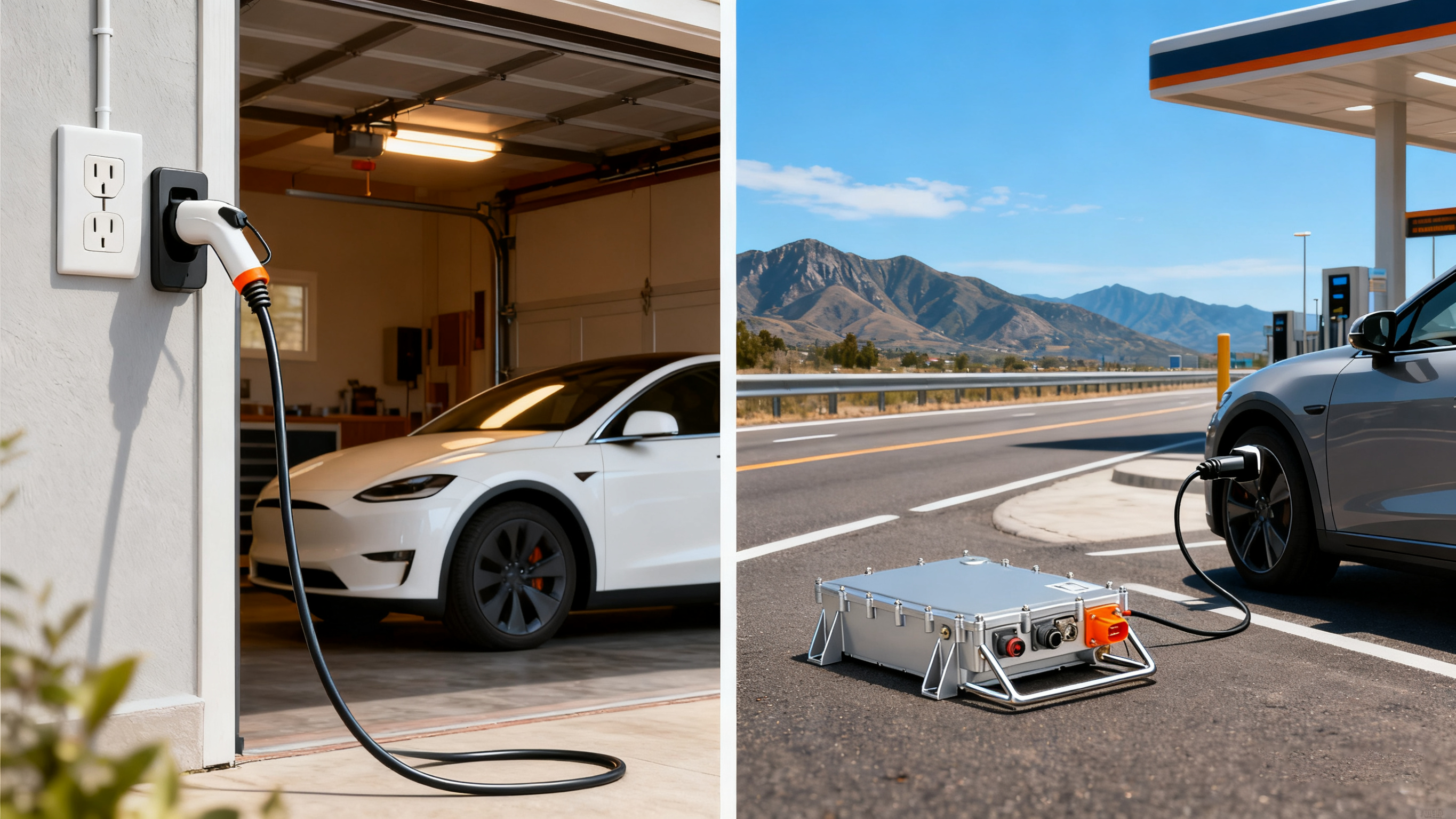
Your onboard charger can only work with what it's given. The Electric Vehicle Supply Equipment (EVSE)—your home charging station or wall plug—must be able to deliver enough power.
-
A standard 120V household outlet (Level 1) provides only about 1.4 kW. This will bottleneck even the most powerful OBC.
-
A dedicated 240V Level 2 charger can deliver 7.2 kW, 11 kW, or more, allowing your vehicle's onboard charger to operate at its full potential.
The takeaway: To unlock your OBC's full capability, you need a charging station that can match or exceed its power rating.
3. Thermal Management
The process of converting AC to DC generates heat. To protect itself and the battery, the onboard charger will reduce its power output if it detects temperatures getting too high. This is common during:
-
Very hot ambient temperatures.
-
Consecutive charging sessions without a cool-down period.
-
Vehicles with less sophisticated cooling systems for the OBC.
Modern, high-quality onboard chargers are designed with efficient thermal management to sustain maximum power for longer durations.
4. Battery State of Charge (SoC) and Health
Your car's Battery Management System (BMS) is in constant communication with the onboard charger. To preserve long-term battery health, the BMS will request that the OBC slows down the charging rate when the battery is:
-
Very high (e.g., above 80%) or very low (e.g., below 20%).
-
Aged or degraded.
This is a protective measure, not a fault with the OBC.
5. Vehicle Design and OEM Strategy
Automakers make strategic choices. A higher-power onboard charger is more expensive, larger, and heavier. Some manufacturers may opt for a lower-power unit to keep the vehicle's cost down, especially on entry-level trims. Often, a more powerful OBC is a premium feature.
The Future is Faster and Smarter
The technology behind onboard chargers is continuously improving. We are seeing trends toward:
-
Higher power densities (more kW in a smaller, lighter package).
-
Bi-directional charging, allowing the OBC to send power from the vehicle's battery back to the grid (V2G) or your home (V2H).
-
Improved efficiency, reducing energy loss as heat.
Understanding your onboard charger empowers you as an EV owner. It demystifies charging times and highlights the importance of this critical component.
Are you interested in the latest advancements in onboard charger technology? Explore the innovative solutions and deep technical resources available at OnBoard-Charger.com.
Comment